From bold banners to sleek business cards, your print materials say a lot about your brand. And with advances in technology, businesses now have access to different types of printing methods designed to suit specific goals and budgets.
From digital printing for quick turnarounds, offset printing for high-volume, consistent colour output, to laser printing for crisp, professional results, each technique offers distinct advantages. Here’s a breakdown of the 12 most common printing types to help you hit your goals and stay on budget.
Two Main Categories of Printing
Most printing falls into one of two buckets:
1. Physical Printing
Physical printing uses plates, cylinders or engraved surfaces to transfer ink onto materials. Because of this structured setup, it is widely used for large-scale production. This makes it an excellent choice for packaging, books, newspapers and speciality stationery, where maintaining consistent quality across high volumes is crucial.
2. Digital Printing
No plates, no fuss. Digital printing eliminates the need for plates by printing directly from digital files. This means zero setup time and faster turnaround times. It’s the ultimate choice for short runs, custom jobs, and those last-minute projects that can’t wait.
12 Common Types of Printing and Their Uses
While printing falls into two core groups, the techniques within them are far more diverse and purpose-driven.
1. Inkjet Printing: The Detail Specialist
Inkjet printing is known for producing rich, detailed prints, especially where colour accuracy matters most.
- How It Works: This printing process uses a spray of microscopic ink droplets onto the material. Because these droplets are extremely fine, they blend smoothly to create sharp images and seamless colour gradients.
- Best For: It is ideal for photo prints, posters and vibrant marketing materials where bold colours and detailed visuals are essential.
- Key Advantages: Inkjet printing excels in colour reproduction and image detail. It handles complex graphics and tonal variations with clarity.
- Limitations: It can be slower than some other types of printing methods. In addition, ink costs may add up over time.
2. Laser Printing: The Office Workhorse
Laser printing is a fast technique for producing sharp, professional documents when speed and precision are key.
- How It Works: Laser printing uses a focused laser beam to create an image on a drum, which then attracts toner powder and transfers it onto the paper. Heat is applied to fuse the toner, resulting in clean, durable prints.
- Best For: It is ideal for business documents, reports, invoices and polished marketing materials such as flyers and business cards.
- Key Advantages: Laser printing delivers crisp text, consistent results and high-speed output, making it suitable for office environments.
- Limitations: However, it may not achieve the same level of colour depth as ink-based methods for photo-heavy designs.
3. LED UV Printing: Vibrant and Versatile
LED UV printing is known for delivering bold visuals and premium finishes, especially when speed and versatility matter.
- How It Works: LED UV printing uses ultraviolet light to cure the ink as it is applied to the surface. Because the ink dries immediately, the process is faster and reduces smudging.
- Best For: It is ideal for posters, brochures, magazines and premium stationery that require vibrant colours and a high-end finish.
- Key Advantages: This method produces high-resolution prints with fine detail and vivid colour. In addition, it can print on diverse materials such as wood, plastic and metal, while offering quick turnaround times.
- Limitations: It is generally more expensive than standard printing styles.
4. Sublimation Printing: Custom Merchandise
When it comes to custom apparel and branded merchandise, sublimation printing stands out for its vibrant, long-lasting results.
- How It Works: Sublimation printing uses special inks that turn into a gas when heated. The gas bonds directly with the fabric fibres and solidifies as it cools, allowing the design to become part of the material rather than sitting on top.
- Best For: It is ideal for apparel, bags, pillows, blankets and promotional merchandise such as mousepads.
- Key Advantages: This method produces brilliant, fade-resistant colours with a smooth finish. In addition, the prints are durable and resistant to cracking or peeling.
- Limitations: However, it is limited to polyester or polymer-coated materials and works best on light coloured surfaces.
5. Screen Printing: Bold and Bulk
Screen printing remains a popular choice for businesses looking to produce bold, high-impact designs at scale.
- How It Works: Screen printing pushes ink through a fine mesh screen using a stencil to form the design. Each colour is applied separately, layer by layer, to build the final image with strong coverage.
- Best For: It is ideal for T-shirts, tote bags, fabric banners and posters, particularly when printing on darker materials.
- Key Advantages: This method is highly cost-effective for bulk orders and produces vibrant, durable prints that withstand regular washing.
- Limitations: However, it is less suitable for intricate, multi-colour designs and small print runs.
6. Offset Printing: High-Volume Consistency
For high-volume projects that demand consistency and sharp detail, offset printing remains a trusted industry standard.
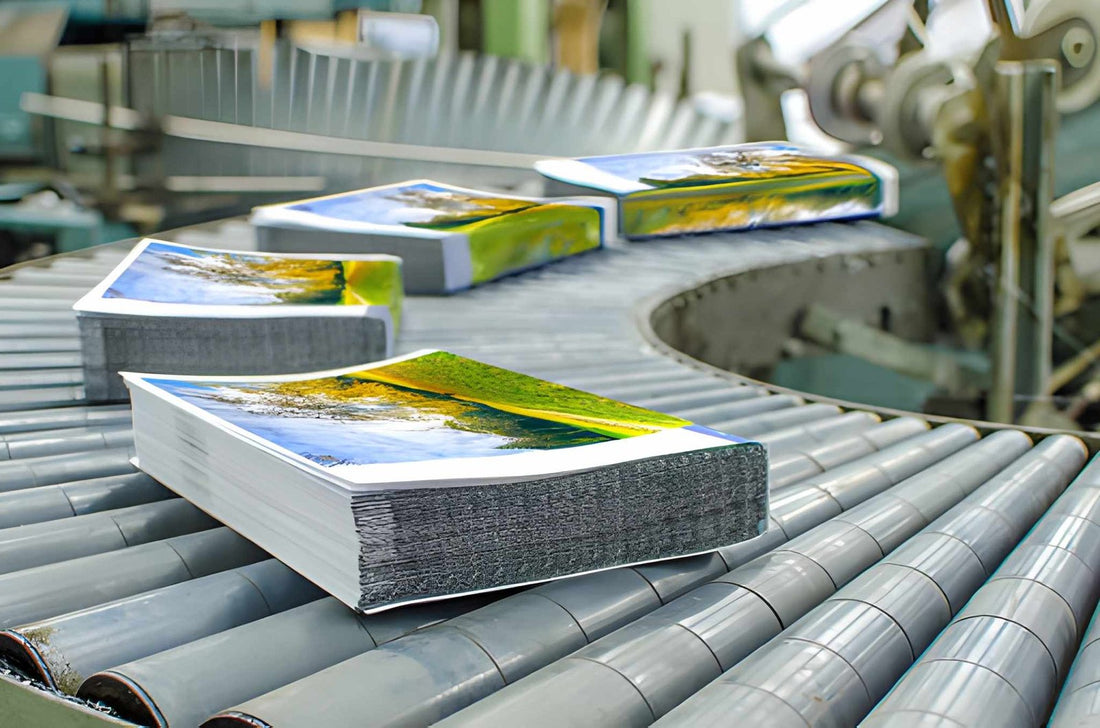
- How It Works: Offset printing uses metal plates to transfer text and images onto rubber blankets, which are then pressed onto the paper. This indirect transfer process ensures clean results.
- Best For: It is commonly used for newspapers, magazines and books that require large-scale production.
- Key Advantages: This method delivers consistent, high-quality output and becomes highly cost-effective as print volumes increase.
- Limitations: It involves longer setup times and higher initial costs.
7. Flexographic Printing: Large-Scale Packaging
Designed for speed and versatility, flexographic printing is a go-to solution for large-scale packaging and labelling.
- How It Works: Flexographic printing uses flexible plates with raised elements that are wrapped around rotating cylinders. As the material passes through the press, ink is transferred quickly onto the surface.
- Best For: It is ideal for packaging, labels, shopping bags, gift wrap and even napkins, especially on materials such as plastic, cardboard and metallic film.
- Key Advantages: This method is fast and well-suited for mass production across diverse materials.
- Limitations: It requires more setup and is less practical for small print runs.
8. Letterpress Printing: The Artisanal Touch
If you are looking to add timeless charm and texture to your prints, letterpress printing delivers a distinctive finish.
- How It Works: Letterpress printing uses raised text or image elements on metal or rubber plates, which are inked and pressed firmly onto thick paper. This process creates a deep, tactile impression that you can both see and feel.
- Best For: It is especially popular for wedding invitations, luxury business cards and projects that call for a vintage aesthetic.
- Key Advantages: This method offers a classic, elegant and artisanal finish with a strong tactile appeal.
- Limitations: It is time-intensive to set up and less suited for large-volume production.
9. Rotogravure Printing: High-Speed Precision
Built for precision and scale, rotogravure printing is a powerful choice for high-end publications.
- How It Works: Rotogravure printing uses engraved cylinders covered with tiny cells that hold measured amounts of ink. As the cylinders rotate, the ink is transferred onto the surface with exceptional accuracy and consistency.
- Best For: It is best suited for magazines, newspapers, packaging, postcards and decorative prints produced in large quantities.
- Key Advantages: This method delivers outstanding colour depth, fine detail and reliable consistency across extensive print runs.
- Limitations: This type of printing involves higher production costs and a more complex setup process.
10. 3D Printing: The Prototype Pioneer
Pushing the boundaries of what printing can achieve, 3D printing turns digital designs into real, physical objects.
- How It Works: It uses a digital file to build an object layer by layer, typically using materials such as plastic or resin. Each layer is carefully added until the final three-dimensional form is complete.
- Best For: 3D printing is widely used for product prototypes, custom-made items, architectural models and film props.
- Key Advantages: This type of printing method enables rapid prototyping, reduces material waste and allows for complex, customised designs.
- Limitations: However, it is not cost-effective for mass manufacturing or large-scale production.
11. Large Format Printing: High-Impact Visuals
Among all the types of printing methods, large-format printing stands out when your message needs to be seen from a distance.
- How It Works: Large format printing uses specialised printers that handle rolls of materials such as paper or vinyl to produce oversized, high-resolution prints. The process is similar to standard printing, but on a much bigger scale.
- Best For: It is commonly used for banners, billboards, backdrops, wall graphics, building wraps and event displays.
- Key Advantages: This method creates high-impact visuals on durable materials suitable for indoor and outdoor use.
- Limitations: It requires specialised equipment and setup to achieve flawless results.
12. Engraving: Refined and Permanent
For projects that demand elegance and permanence, engraving offers a refined and lasting impression.
- How It Works: Engraving involves etching a design into a metal or other hard surface using a sharp tool or a laser. The design is cut directly into the material, creating depth and intricate detail.
- Best For: It is commonly used for premium invitations, wedding stationery, personalised gifts and metal business cards.
- Key Advantages: This method delivers a sophisticated, durable and high-end aesthetic that feels both timeless and distinctive.
- Limitations: Engraving can be time-consuming and is less ideal for large-volume production.
How to Choose the Right Type of Printing Method for Your Project?
Choosing the right printing method is not just about cost, it is about matching your design, timeline and volume to the most suitable technique.
1. Volume and Quantity Requirements
Consider how much you need to print. Small runs are often more suited to digital methods due to lower setup costs, whereas bulk production becomes more cost-effective with traditional techniques such as offset or flexographic printing.
2. Material and Surface Type
After deciding on volume, think about the surface your design will be printed on. Since not every printing method is compatible with every surface, selecting the right approach for paper, fabric, metal, or vinyl is essential. This ensures better durability, accurate colour output and an overall professional appearance.
3. Budget and Timeline
Balance setup costs with per-unit costs. While some methods require a higher initial investment, they reduce costs at scale. For urgent or same-day projects, faster setup options such as digital printing may be more practical.
4. Customisation and Personalisation Needs
If your project requires names, codes or unique designs on each piece, variable data printing offers clear advantages. Personalisation not only enhances engagement but can also strengthen your marketing impact when used strategically.
5. Desired Finish and Brand Perception
Think about the impression you want to create. Premium tactile finishes, such as letterpress or engraving, elevate brand perception, whereas high-volume methods focus on consistency.
Power Your Printing Projects with Doorstep Prints

If you are looking to create marketing materials that leave a lasting impression, selecting the right printing partner is just as important as choosing the method itself.
At Doorstep Prints, we bring expertise across different types of printing styles. From roll up banner printing and sticker printing to flyers, posters and custom-branded materials, we provide tailored solutions designed around your needs. With flexible customisation and efficient service, we help businesses print smarter and faster.
Ready to elevate your next project? Contact us today to help you stand out with confidence.