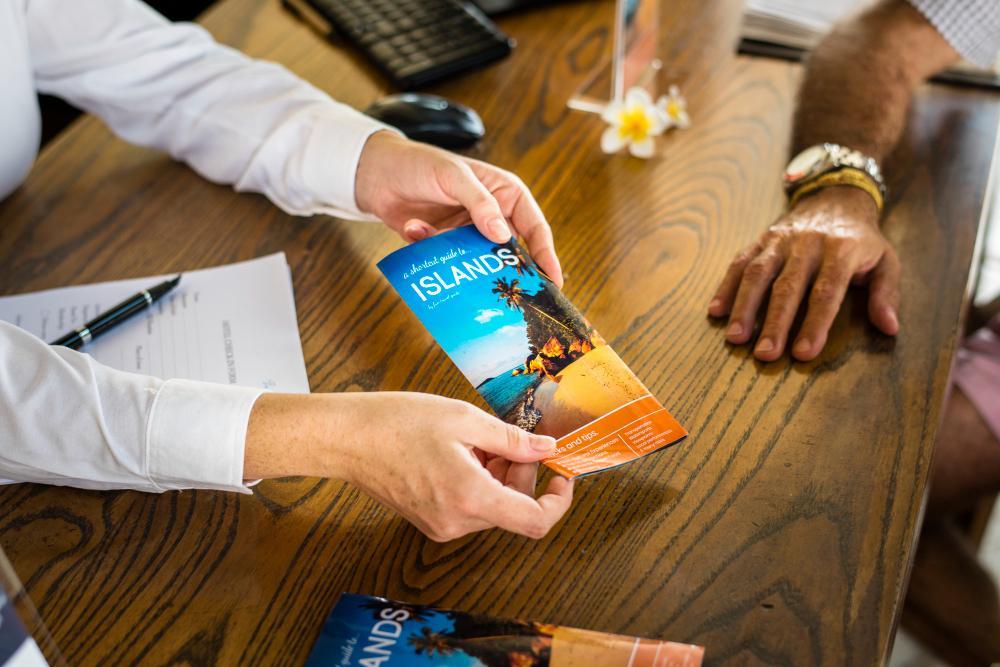
If you are ordering flyers, brochures, name cards or other printed materials, choosing the paper is not simply a matter of picking the highest GSM available. A lightweight flyer may be easier to distribute in large quantities, while a name card needs enough firmness to withstand regular handling. A brochure has another consideration altogether: the paper needs to feel substantial without becoming difficult to fold.
This is where GSM comes in.
GSM stands for grams per square metre and measures the weight of paper. A higher GSM means more paper weight per square metre, so the sheet will generally feel heavier and more substantial. Lower-GSM paper is lighter and usually easier to fold.
However, GSM does not tell you the exact thickness or quality of a paper stock. Two papers with the same GSM can still differ because of their composition, density, coating and finish. So, what GSM should you actually choose? That depends on what you are printing and how the finished piece will be used.
Common GSM Ranges and Uses
Different GSM weights have different purposes, from lightweight everyday paper to rigid card stock.
|
GSM Range |
General Paper Weight |
Common Uses |
|---|---|---|
|
35–55 GSM |
Very light |
Newspapers, tracing paper |
|
70-90 GSM |
Light |
Office paper, invoices, forms, reports, drafts |
|
100-120 GSM |
Medium |
Premium letterheads, corporate stationery, branded notepads |
|
130-250 GSM |
Medium to heavy |
Promotional flyers, art posters, soft book covers |
|
300-400+ GSM |
Very heavy/ cardstock |
Business cards, luxury packaging, greeting cards |
What GSM Should You Choose for Your Print Project?
The right GSM depends on the print project, how you'll use it, and the finish you want.
1. Flyers And Leaflets: Around 150–200 GSM
For most promotional flyers and leaflets, 150–200 GSM gives the paper more structure than ordinary office paper while keeping it manageable for distribution and folding. Doorstep Prints offers 128, 157, and 190 GSM options for leaflet and flyer printing.
2. Brochures And Booklets: Around 150–200 GSM
Brochures benefit from stock that is firm enough to handle but still practical for folding, making them useful for menus, product catalogues, company profiles, event programmes, and marketing materials. We provide multiple panel options, premium paper stocks, and finishes for customised brochures.
3. Posters: Around 150–200 GSM and Above
For paper posters that need greater structure than ordinary printer paper, 150–200 GSM is a common starting range. The requirements change when a poster needs to be larger or withstand tougher conditions. Doorstep Prints uses 260 GSM polypropylene paper for large posters, which is waterproof and tear-resistant.
4. Name Cards: Around 300–350 GSM
Business cards generally use heavier cardstock to withstand frequent handling. We use 250–350 GSM cardstock for name card printing, with standard and custom name card sizes available to suit different professional needs.
5. Letterheads And Corporate Stationery: Around 100–120 GSM
At this range, letterheads remain suitable for everyday writing, printing, folding, and use with envelopes while feeling more substantial than standard copier paper.
6. Greeting Cards And Invitations: Around 240–350 GSM
For invitations and greeting cards, 240–350 GSM covers stocks from moderately firm sheets to heavier cardstock that holds its shape well.
7. Packaging And Luxury Materials: Around 350 GSM and Above
Heavy cardstock at 350 GSM and above can suit packaging components such as sleeves, tags, and presentation pieces, although the required weight depends on the structure and material.
Does Higher GSM Mean Better Paper?
Higher GSM does not automatically mean the paper is stronger, thicker, or better; it only means heavier paper. The right GSM depends on the intended use, print finish, and handling requirements.
What GSM Tells You About Paper?
GSM gives you an indication of a paper’s weight and typical applications, but other factors also affect its thickness, appearance, and printing performance.
- Typical Application: GSM helps indicate whether a stock suits lightweight prints such as flyers or heavier products such as business cards.
- Show-Through: Heavier paper generally reduces show-through in double-sided printing, although opacity also depends on the paper's composition.
- Exact Thickness: Two papers with the same GSM can have different thicknesses because of fibre composition, density, compression, and coating.
- Print Characteristics: GSM alone cannot predict colour reproduction, detail, or ink behaviour, which depend on the paper's surface and the printing process.
- Finish: Gloss, matte, textured, and uncoated finishes can give papers with the same GSM very different appearances and feels.
Common Mistakes When Choosing Paper GSM
A few common GSM selection mistakes can lead to the wrong paper choice, unnecessary costs, or printing issues.
- Choosing GSM Based Only on Cost: Selecting the cheapest GSM can result in paper that is unsuitable for customer-facing materials or the intended print format.
- Mixing Up Text and Cover Weights: Text and cover stocks use different basis-weight systems, so don't compare their numbers directly without checking the actual specifications.
- Using High-GSM Stock Without Checking Printer Compatibility: Cardstock and other high-GSM papers may require printers or paper trays designed to handle heavier stocks.
Get Your Print Project Right With Doorstep Prints

Once you have chosen the right GSM, the next step is finding a printing partner that can deliver the paper quality, finish, and turnaround your project requires.
Doorstep Prints combines 20+ years of commercial printing experience with fast turnaround and free delivery across Singapore. Our local operations, competitive pricing, and range of paper sizes, stocks and finishes support projects from flyers and name cards to brochures and event materials.
You can place your order online by selecting the product, uploading your artwork and making payment through the online checkout.
Planning your next print run? Contact Doorstep Prints for a quote, and we’ll deliver your prints to your doorstep.
Frequently Asked Questions About Paper GSM
What is the GSM of paper?
GSM means grams per square metre and is used to measure the weight of paper. Higher GSM generally means a heavier sheet.
Which is better, 80 GSM or 70 GSM?
80 GSM is heavier and usually feels more substantial. 70 GSM is lighter and suitable for everyday printing.
Is 100 GSM paper thick?
No, 100 GSM paper is not considered thick. It is slightly heavier than standard 80 GSM office paper, offering a sturdier feel while remaining flexible like regular paper.
Is 300 GSM too thick?
No, 300 GSM is suitable for heavy-duty uses such as business cards, greeting cards, and watercolour painting, but it is generally too thick for standard office printing.