If you've ever walked through a trade show, attended a school science fair, or browsed a retail store, chances are you've come across foam board without even realising it. Also known as foam core or poster board, it is one of the most widely used display and mounting materials across industries.
While many people associate it with school projects, its value extends far beyond that. Thanks to its lightweight yet rigid structure and ease of handling, foam board is ideal for everything from professional exhibitions and corporate presentations to retail displays and architectural models.
What is a Foam Board?
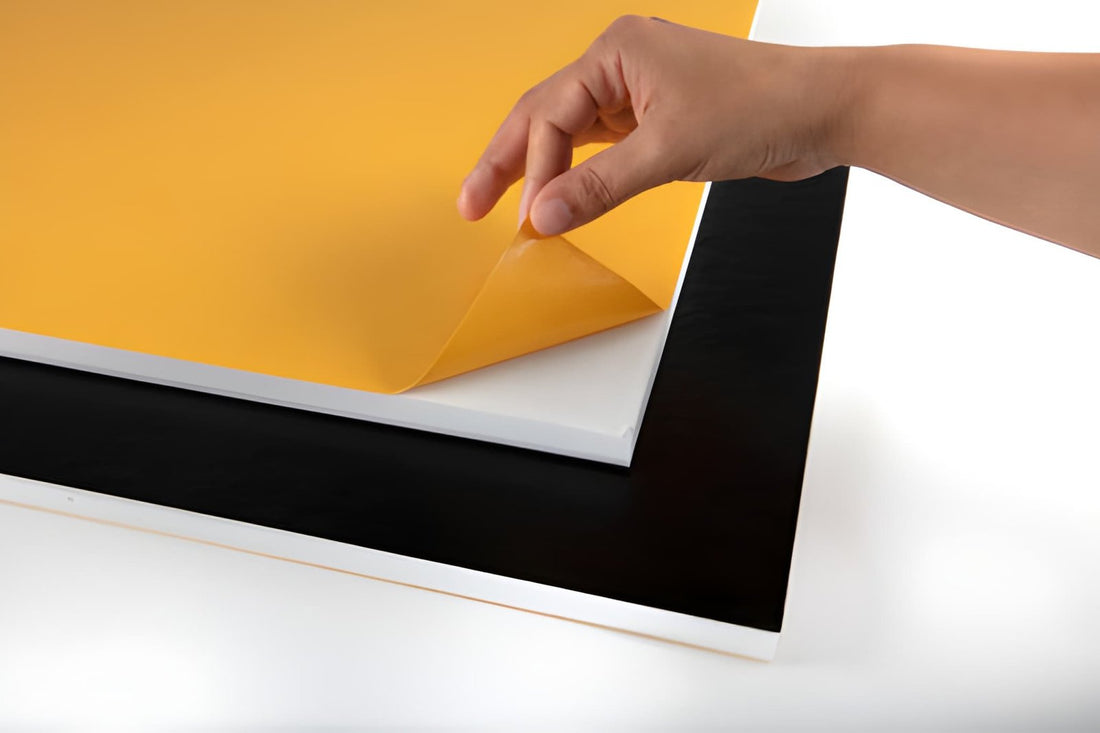
Foam board, also known as foam core board, is a lightweight yet sturdy material commonly used for signage, displays, and mounting. It is made from a polystyrene foam centre sandwiched between two outer layers of paper, such as clay-coated, cotton archival, or Kraft paper. As a result, it offers a smooth surface while remaining easy to handle and cut.
Types of Foam Board: Which One is Right for Your Project?
Foam boards come in different types, each designed for specific uses.
1. Standard Foam Board
The most widely available option, standard foam board features a paper-faced core suited to general indoor applications. It is ideal for mounting posters, school projects, presentations, and temporary signage.
It is cost-effective for high-volume or short-term needs. However, it is less suitable for environments that require frequent handling, as the paper surface can wear over time.
2. Gator Board
Gator board is a heavier-duty variant of foam board, featuring a dense foam core with a durable wood fibre veneer outer facing. As a result, it offers excellent resistance to bending and warping, even with frequent handling.
This added strength makes it a reliable option for more demanding environments. Consequently, it is often preferred for professional exhibitions, gallery displays, and corporate presentations where durability under repeated use is critical.
3. PVC Foam Board
Made from polyvinyl chloride (PVC), this type of foam board offers greater moisture resistance and physical durability than the standard option. As a result, it is better suited to applications requiring a more robust, long-lasting material.
It is commonly chosen when a higher-quality finish is a priority. Available in a range of colours and thicknesses, PVC foam board allows greater flexibility to meet specific project requirements.
Popular Foam Board Uses Across Industries
From retail displays to creative projects, foam board is used across a wide range of industries thanks to its versatility and ease of use.
1. Mounting and Framing Photographs and Artwork
Mounting prints onto foam board keeps them flat and prevents wrinkling, bubbling, and warping, issues that become particularly visible on large-format prints.
The rigid backing also eliminates negative space within picture frames, drawing attention directly to the image. Photographers, artists, and galleries use this approach to present work cleanly without the cost of traditional framing materials.
2. Trade Show Displays and Event Signage
Another common application of foam board is in trade show displays and event signage, where quick setup and visual impact are crucial. Boards can be mounted on stands, leaned against surfaces, or suspended from display systems, giving event teams flexible placement without heavy infrastructure.
Moreover, being lightweight, foam board is easy to transport and assemble, which is useful for time-sensitive setups. At the same time, it retains its shape across multi-day events, making it a practical fit for businesses that need professional-looking displays without investing in permanent signage.
3. Retail Point-of-Sale and Pop-Up Displays
In retail environments, foam board is commonly used for point-of-sale advertising near registers and product shelves, helping direct customer attention to promotions and featured products.
In addition, it is widely used for pop-up displays and kiosk backdrops because it is portable and quick to assemble. As a result, they are well-suited to roadshows, mall activations, and seasonal campaigns.
4. School Projects, Academic Posters, and Research Presentations
Science fairs, academic conferences, and faculty presentations have long relied on foam board as the standard display material for visual summaries and research poster printing. Its rigid surface helps keep printed panels, charts, and photographs neat throughout an event.
This makes foam board a cost-effective and accessible format for university students in Singapore across a wide range of academic uses.
5. Corporate Presentations and Office Displays
In corporate settings, foam board is used to mount presentation panels, infographics, and campaign visuals for meetings, briefings, and client-facing spaces. Marketing teams and agencies also use it to present mood boards and creative proposals in a tangible, professional format.
Compared to rolled or laminated posters, mounted prints offer a more polished appearance and are straightforward to update as campaigns evolve.
6. Architectural Models and Design Prototypes
Architects, interior designers, and product designers use foam board to build scale models and 3D prototypes. It cuts and scores cleanly, enabling precise construction of walls, facades, and structural elements.
In addition, it is light enough to transport without risk of damage, making it well-suited for client presentations and design reviews. It is also popular among hobbyists creating dioramas and detailed tabletop environments.
7. Photography and Video Lighting Setups
Beyond display applications, white foam board is widely used in photography and videography as a light reflector. Positioned to bounce natural or artificial light back onto a subject, it helps fill in shadows and create a more even exposure without the need for professional equipment.
In contrast, black foam board functions in reverse by absorbing light, allowing photographers greater control over contrast and mood.
Key Tips for Working With Foam Board
Although foam board is user-friendly, proper cutting, mounting, and storage techniques are essential for achieving the best results.
- Cutting and shaping: Use a sharp craft knife with a metal ruler. Score lightly on the first pass, then increase pressure on the second to avoid tearing the outer facing. For curves or intricate shapes, make multiple shallow passes rather than forcing a single cut through.
- Adhesives and mounting: Spray adhesive and double-sided mounting tape deliver the most even, bubble-free bond for attaching prints. Avoid hot glue guns entirely: the heat melts the polystyrene core, causing surface deformation and a weakened bond.
- Storage and handling: Store foam board flat in a cool and dry environment. Boards left leaning against a wall for extended periods will warp. Handle large sheets from the centre rather than the edges to prevent bending during transport.
Premium Foam Board Prints for Every Need at Doorstep Prints

With so many uses of foam board across industries, it remains one of the most versatile materials available. However, achieving a professional finish depends heavily on print quality, which is where Doorstep Prints comes in.
Our foam boards are specially engineered to resist warping and are fully waterproof, ensuring durability across various environments. To maximise the performance of this material, we use a specialised anti-static printing process that allows the ink to bond cleanly and evenly to the surface. While this adds to our costs, it enables us to consistently deliver exceptionally high-quality foam boards.
We offer high-quality foam board printing with direct printing onto the board, no additional mounting required. Available in standard paper sizes from A0 to A5, as well as custom dimensions, our boards can be produced with or without capping to suit your needs. In addition, we also offer digital printing services to support a wide range of print requirements.
Ready to bring your ideas to life? Get in touch with us and get high-quality foam board prints today.